FDA proposes moving cancer drug-matching IHC tests off the PMA track to 510(k)
Under a proposed order, immunohistochemistry tests used to select patients for specific cancer drugs, including HER2 and PD-L1 companion diagnostics, would move from Class III to Class II. New tests would need 510(k) clearance rather than a PMA.
The Food and Drug Administration wants to take a type of cancer companion diagnostic it has reviewed since 1998 off its strictest review pathway. In a proposed order published Nov. 12, the agency would reclassify immunohistochemistry tests used with approved oncology drugs from Class III, which requires premarket approval, to Class II. New tests would then reach the market through 510(k) clearance.
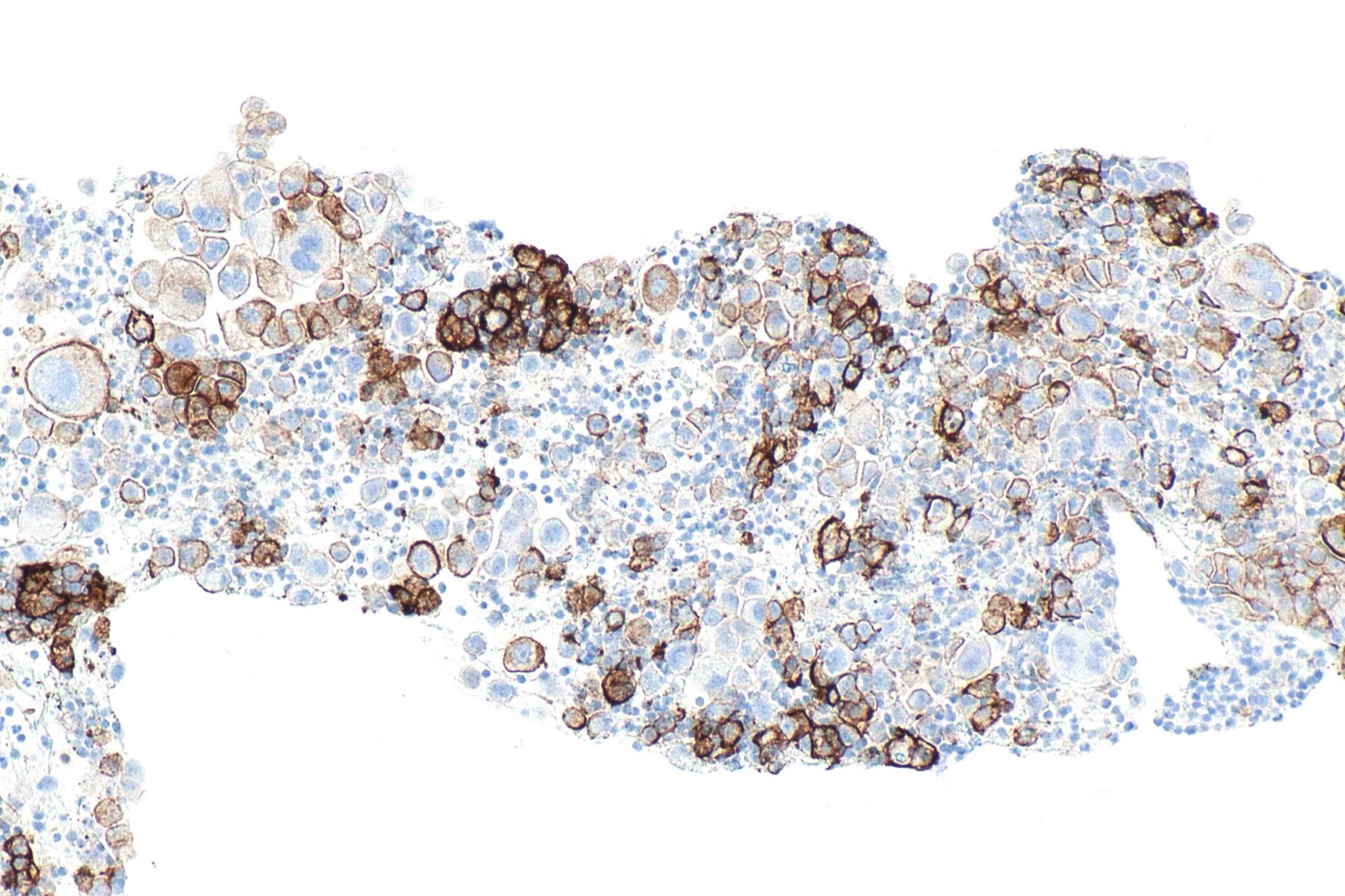
Immunohistochemistry, or IHC, uses antibodies to stain proteins in tumor tissue. The order covers tests in 12 product codes that detect markers such as HER2 and PD-L1 to help select patients for specific cancer drugs. It would create a new regulation, 21 CFR 864.1895, with special controls that tests would have to meet.
Why it matters: Premarket approval is FDA's most demanding device pathway, and every new IHC companion test, and many changes to existing ones, has gone through it. FDA says the 510(k) route is less burdensome and generally more cost-effective for both industry and the agency and typically faster, and that it expects the change to let more manufacturers develop these tests. For diagnostics makers and the drug companies that pair therapies with them, the pathway sets what a new test must submit and how long review takes.
The track record FDA cites
FDA approved the first such test, Dako's HercepTest for HER2 in breast cancer, on Sept. 25, 1998. Since then it has approved an additional 21 original PMAs and about 270 PMA supplements for IHC tests in the 12 product codes, according to the order.
The order covers both companion diagnostics, which provide information essential to a drug's safe and effective use, and tests whose results are referenced in a drug's label but are not essential to it. The first test of the second kind, PD-L1 IHC 28-8 pharmDx for use with Opdivo, was approved Oct. 9, 2015.
To justify the change, FDA relied on data from 14 original PMAs old enough to be used under the law's six-year rule, published literature and postmarket reports. As of July 15, FDA counted 48 adverse event reports for these tests since 1998, most involving false negative results, with more than 70% of reports stating no patient consequence. It found one Class III recall, 10 Class II recalls and no Class I recalls, with one Class II recall from 2023 still open.
FDA also received a January 2026 petition from Ventana Medical Systems asking it to reclassify PD-L1 IHC assays. The agency said it is proposing the broader change on its own initiative, after announcing in January 2024 that it intended to start reclassifying most high-risk in vitro diagnostics.
What would change
If finalized, tests already approved through PMA could stay on the market under those approvals without a new authorization. Manufacturers would file a 510(k) for significant changes to those tests, and any new test would need clearance before marketing. FDA noted that companies could use predetermined change control plans to make some future modifications without new submissions.
The proposed special controls would require clinical data from specimens representative of the intended-use population, such as data from use as the enrollment assay in the drug's trial or a comparison with an FDA-authorized test. They would also require reproducibility testing across sites for tests used at more than one site, and labeling consistent with the paired drug's label.
Final guidance on predetermined change control plans is among the priority documents FDA's device center plans to issue in fiscal 2027.
What comes next
Comments are due Jan. 11, 2027, under docket FDA-2026-N-12508. FDA proposes that a final order take effect 30 days after it is published.