OpenAI sends ChatGPT agents into EHRs and payer portals, citing CVS and Cigna work
OpenAI released computer-use agents that click and type through existing health software where APIs fall short, plus more than 20 new plugins from Availity, Redox, TriZetto, UpToDate and others.

OpenAI wants its agents to work in health care software the way a front-office employee does: by reading the screen, clicking and typing.
The company said Nov. 16 that computer-use agents are now available for health care teams through ChatGPT for Healthcare, ChatGPT for Clinicians and its API. The agents move between applications such as electronic health records, scheduling systems and insurer portals to carry out multistep tasks. OpenAI also upgraded the clinical search inside ChatGPT for Healthcare and added more than 20 health care plugins.
Why it matters: Health care teams often move information between disconnected systems by hand, OpenAI said, including steps that APIs do not reach. Alongside the agents, OpenAI published a per-task cost for administrative work such as prior authorizations and appeals, and said its results show progress toward affordable agents for high-volume administrative workflows.
Who is using it
OpenAI named four organizations working with the agents. CVS Health uses them to send documents, process referrals and support specialist consults, according to OpenAI. In one production workflow, an agent cleared a document backlog that had built up over months in a single weekend, and another handles system steps for tens of thousands of consults each day under human oversight, the company said. CVS is open sourcing an Agent Kit it built on OpenAI's Agents SDK.
"Less time on administrative work means more time for care," said Lagan Khare, executive director of engineering at CVS Health.
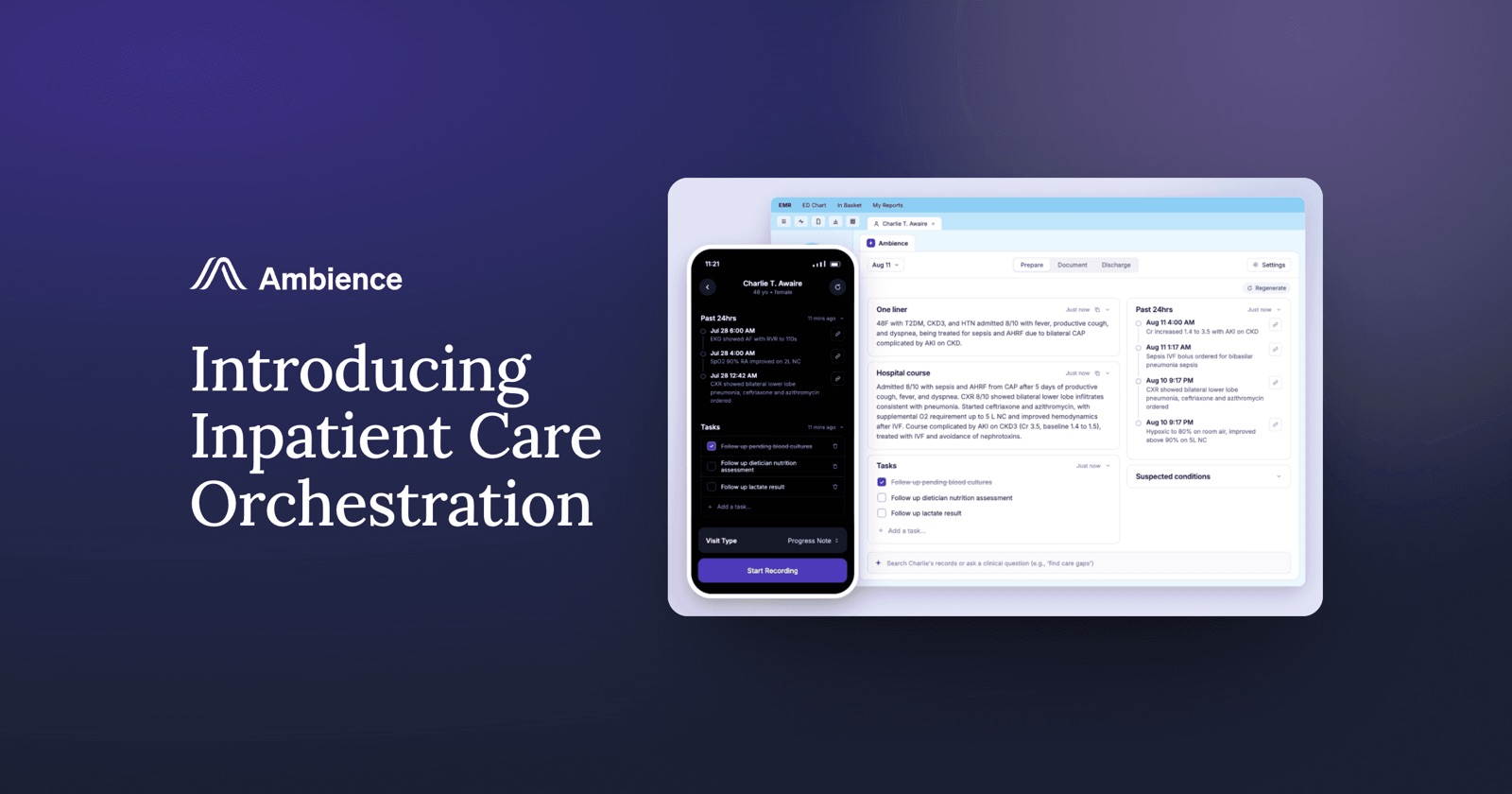
Cigna Healthcare uses the agents to assemble member information for case managers, who previously had to work through more than 10 separate systems, OpenAI said. Madhu Nutakki, Cigna Healthcare's chief information officer, said the project moved from concept to deployment in under eight weeks. Abridge is developing inpatient agents for discharge planning, and Ambience showed an agent preparing a prior authorization request on an insurer's website that stops to ask a clinician when the chart is ambiguous. OpenAI also named startups Assort, Bunkerhill, Forus, Gravity and Tennr as building on the capability.
The unit economics
On HealthAdminBench, which OpenAI described as an independent benchmark from Stanford researchers covering tasks such as prior authorizations, appeals and medical equipment orders, its GPT-6 Astra model earned 94.3% of available rubric points and GPT-6 Luna earned 91.8%, the company said. OpenAI put Luna's cost at 8.5 cents per task, 98% less than Astra.
The new plugins come from Aiva, Amion, Assort Health, Availity Extend, Elation Health, Ferry, IMO Health, Infinitus, K Health, Luma Health, Metriport, Notable, Oracle, PenguinAI, Photon, Redox, Stedi, Subsalt, TriZetto, Turquoise and UpToDate Expert AI. They are available in ChatGPT for Healthcare, including inside the EHR through a product OpenAI calls ChartGPT.
Where it fits
The release lands six days after Google Cloud launched Gemini for healthcare, an agent platform aimed at the same payer and provider paperwork. Google lets customers pick models from Google, Anthropic or OpenAI, so OpenAI's models can reach health systems through Google's platform as well as its own.
What comes next
ChatGPT for Healthcare customers can turn on the agents and new plugins through their workspace administrators, and ChatGPT for Clinicians is free for eligible, verified U.S. clinicians, OpenAI said. Both offer customers a business associate agreement to support HIPAA-compliant work, and OpenAI said content shared with ChatGPT for Healthcare is not used to train its models. Organizations can buy ChatGPT for Healthcare directly or through an AWS Marketplace private offer. OpenAI did not publish ChatGPT for Healthcare prices or disclose terms with CVS, Cigna or any plugin partner.